You Do Not Need to Know Art to Collect It

You Do Not Need to Know Art to Collect It
Collecting art does not have to begin with expertise. It can begin much earlier—with attention, curiosity, and the quiet realization that certain images continue to draw us back. A personal collection often starts not with knowing what matters, but with noticing what matters to us.
There is a particular kind of hesitation that appears when people talk about collecting art.
It often begins with a sentence that sounds perfectly reasonable: I love art, but I do not really know enough about it.
Behind that sentence is an assumption that collecting belongs to people who understand movements, periods, provenance, artists, galleries, and the complicated language that sometimes surrounds the art world. But perhaps collecting begins somewhere much simpler. Perhaps it begins when you notice that one image holds your attention longer than another.
Collecting Premium Wall Art Begins With Attention
Imagine entering a room containing twenty works of art. Nobody tells you the artists’ names. There are no labels, prices, dates, or explanations of which works are considered important. You are simply asked to look.
Almost certainly, your attention will not be distributed equally. Something will pull you closer. Perhaps it is scale. Perhaps color. Perhaps an expression in a portrait, an almost empty landscape, the texture of paint, or a composition that you cannot quite explain.
You may walk past a work and then turn around. A photograph may remind you of somewhere you have never actually been. A particular shade of blue may feel strangely familiar. You may imagine an artwork on a wall in your home before you know anything about who made it or where it belongs in art history.
That inability to explain your response does not make the response less meaningful. Learning to notice those reactions is one of the foundations of developing a personal eye.
A personal collection begins when attention becomes a pattern.
Curiosity Came Before Expertise
People Have Always Kept Meaningful Things Close
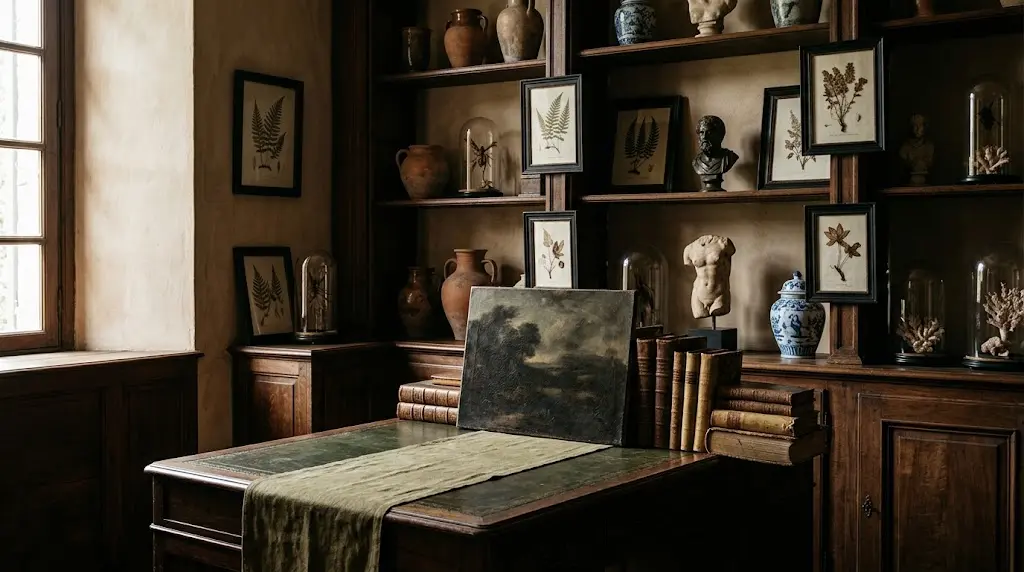
Long before contemporary galleries, international art fairs, online marketplaces, and museum labels, people surrounded themselves with objects that carried meaning. Paintings were commissioned. Textiles were preserved. Ceramics travelled between generations. Prints came home from distant cities. Portraits marked family histories. Drawings, books, maps, sculptures, natural specimens, and other objects slowly accumulated in private rooms.
Some collections were certainly expressions of status. Others were records of curiosity. Their owners wanted to keep what fascinated them close.
Knowledge Can Follow the First Response
Context matters. Learning about an artist, a period, a material, or a technique can deepen our experience enormously. But knowledge does not have to replace looking, and it does not need to become the price of admission.
Often curiosity creates its own path. A painting leads you toward an artist. The artist leads you toward a period. The period introduces another visual language. A material creates interest in a technique. A photograph leads toward architecture, and architecture toward design.
Knowledge becomes the consequence of curiosity rather than the qualification required before curiosity is allowed to begin.
Why Attention Matters More Today
We encounter an extraordinary number of images every day. They appear on phones, screens, advertisements, shops, hotels, restaurants, digital magazines, and social platforms. Thousands of visual decisions move through our attention with remarkable speed.
The paradox is that seeing more does not necessarily mean looking more carefully. Often it means the opposite. Images become disposable. We swipe before we observe. We categorize before we experience. We save something and forget why it interested us.
An Artwork in a Home Behaves Differently
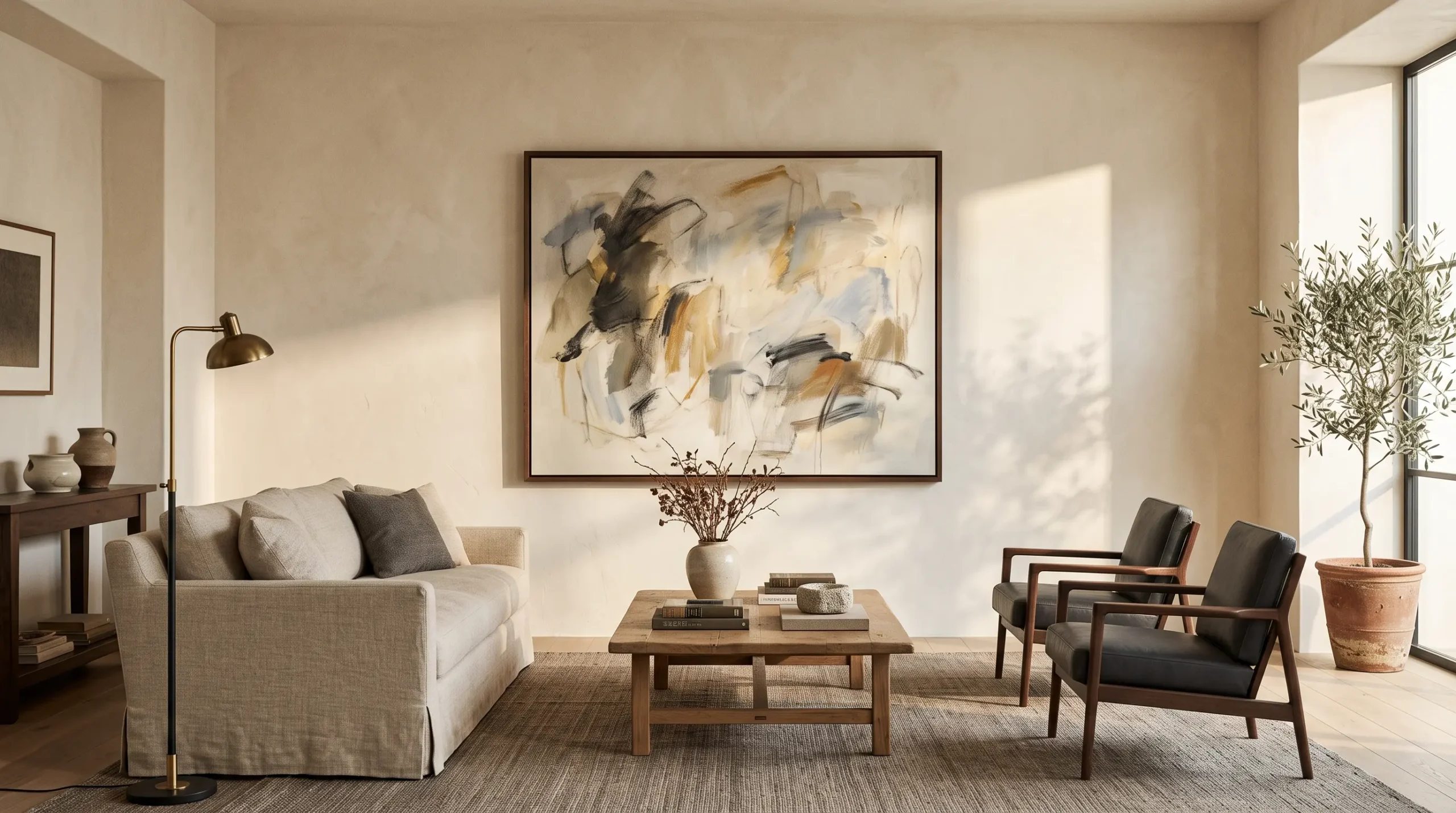
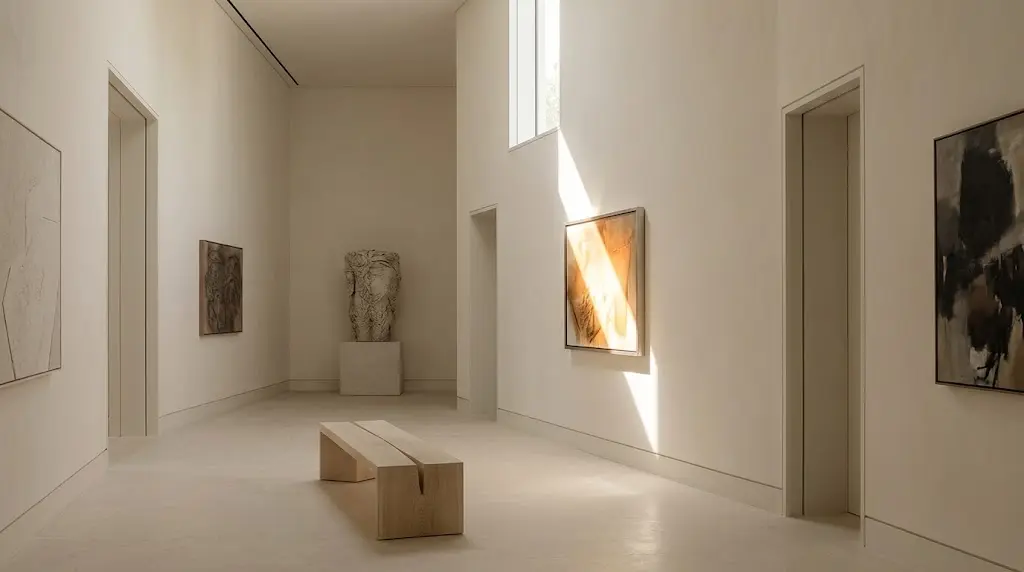
A work placed on a wall behaves differently from an image on a screen. You live with it. Morning light changes it. Furniture changes around it. You see it while entering a room, reading, eating, working, talking with friends, or simply passing through a hallway.
Eventually you stop consciously noticing that it is new. Yet it remains part of the visual atmosphere of your life.
This is one reason choosing Premium Wall Art for an interior can become more meaningful than simply filling an empty wall. The question is not only whether a work suits the room today, but whether it will continue to hold something for you after familiarity replaces novelty.
A more interesting question than Does this match my room? may be: Will I still want to look at this when it no longer feels new?
Art Does Not Need to Match the Room
There is a useful distinction between a curated interior and an interior that appears overly arranged. Beautiful homes rarely feel as though every object arrived on the same afternoon.
They contain differences. A contemporary abstract work may sit above an old wooden console. A monochrome photograph may appear beside a sculptural lamp. An inherited object may share a room with something discovered only months ago.
These contrasts give interiors depth because they suggest time.
Art does not need to perfectly repeat the colors of a sofa. It does not need to belong to the same stylistic category as every piece of furniture. Sometimes the work that introduces a slight tension into a room is the work that makes the room memorable.
The objective is not perfect coordination. It is visual conversation.
This becomes especially important when thinking about art as something that may remain with us for years. Furniture moves. Rooms change. Homes change. A meaningful work can travel with us and take on a different role in each setting.
Three Ways to Begin Developing a Collector’s Eye
1. Notice What Repeats
Taste often reveals itself through repetition before we can describe it in words. Look at the images you save, the rooms you remember, the paintings you stop in front of, the architecture you photograph, and the pages you return to.
Patterns begin to appear. Perhaps you repeatedly choose muted landscapes. Perhaps you are drawn to deep black, old architecture, botanical forms, expressive portraits, geometric structure, or unusually quiet compositions.
Do not rush to name your style. Simply notice what repeats. Labels can help organize ideas, but your recurring attractions often tell you more about your visual language than a predetermined design category can.
2. Sometimes Choose the Work Before the Wall
One of the most common ways to buy art is to begin with an empty space. There is a wall above the sofa. It measures a certain width. Something is needed there. The search then becomes an exercise in filling dimensions.
Scale and proportion matter enormously in interior design, but beginning with the wall can sometimes reverse the most interesting part of the process.
Try occasionally doing the opposite. Find the work first. Then find its place.
A work you genuinely respond to can often live in more locations than you initially imagine. A large piece might eventually belong in a dining room rather than a living room. A smaller work may become unexpectedly powerful when placed alone on a narrow wall.
3. Allow the Collection to Become Inconsistent
Perfect consistency is tempting. Once we identify a visual preference, we often want everything to follow it.
But the most personal collections usually contain exceptions.
You may love monochrome photography and still find one intensely colored painting impossible to forget. Your home may be restrained and neutral while a dramatic figurative work continues to draw you back. You may usually choose contemporary art but become fascinated by an old botanical study.
Pay attention to the exception.
A collection assembled slowly will inevitably reflect different periods of your life. That is not a flaw. It is history. The goal is not to prove that your taste is perfectly consistent. The goal is to let it become yours.
A More Personal Way of Seeing
There are objects we like because they work beautifully in a room. And there are objects we would take with us if we left that room forever.
Art can gradually move from one category into the other. You remember the first room where a work hung. You move it. The light changes. Your furniture changes. Perhaps even your taste changes. Yet the work remains.
That kind of attachment cannot easily be predicted by expertise, price, fashion, or critical reputation. It develops through living.
This is also why a personal collection does not need to begin at scale. One carefully chosen work can matter more than a room filled with objects selected only because they appear correct. For those interested in art with a more singular character, Curatora One of One reflects that slower, more individual relationship between artwork, collector, and interior.
Perhaps the most interesting collectors ultimately develop something more valuable than the ability to explain every work they encounter. They develop attention. They recognize when an image remains in their thoughts after they have left it. They become comfortable saying, I do not know why I like this yet.
That final word matters: yet.
Because curiosity leaves the door open.
You do not need to know art to begin collecting it. You need to pay attention, and then trust yourself enough to notice when you want to look again.
At The House of Curatora, curation begins from the same quiet observation: among countless images, only some ask us to look again.
I would be interested to hear how you see it.