

Blog
Why Some Rooms Stay With Us | Curatora Journal

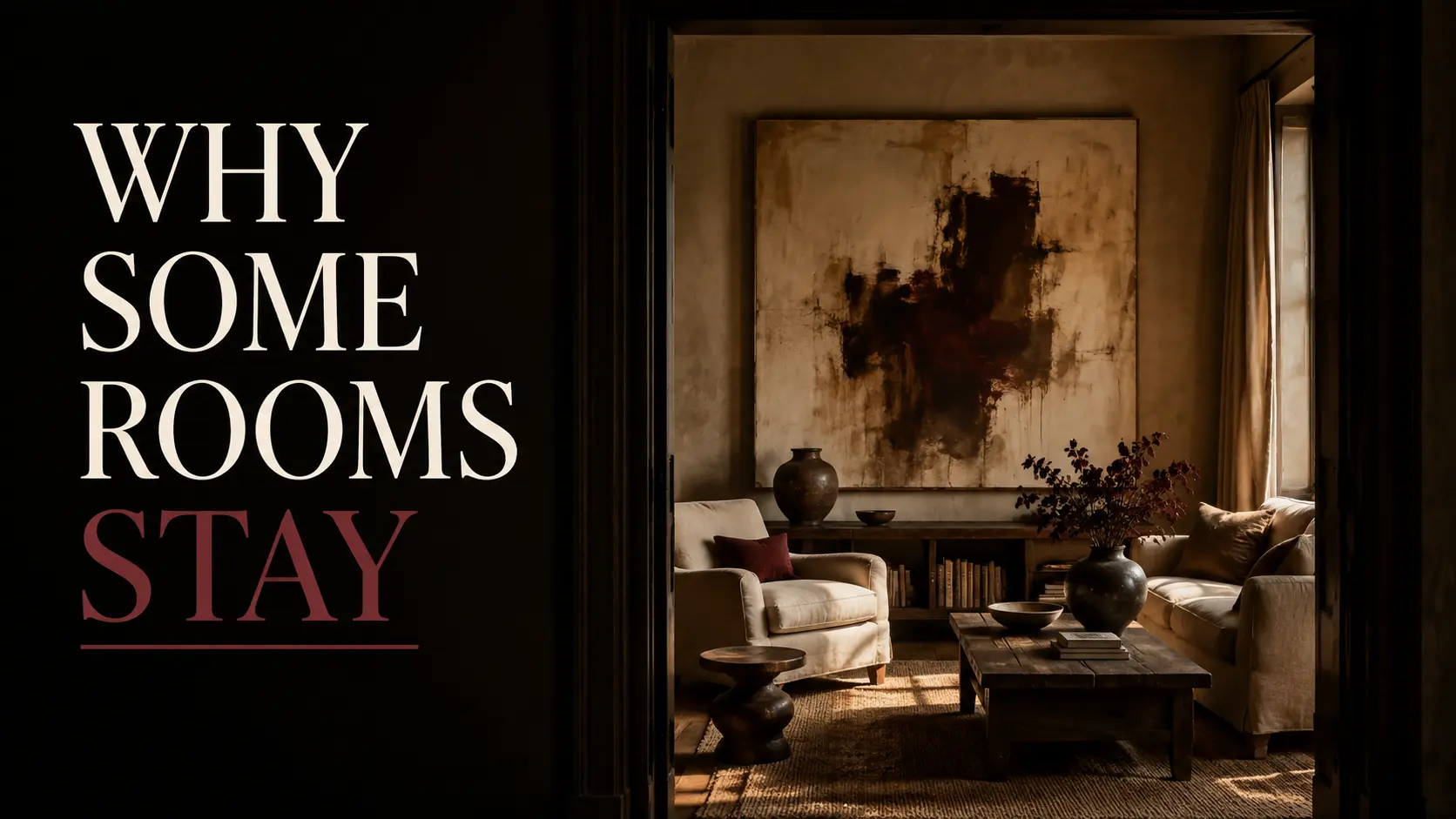
Why Some Rooms Stay With Us
The rooms we remember are rarely defined by perfection. They stay with us because light, art, texture, and personal objects form a distinct emotional atmosphere.
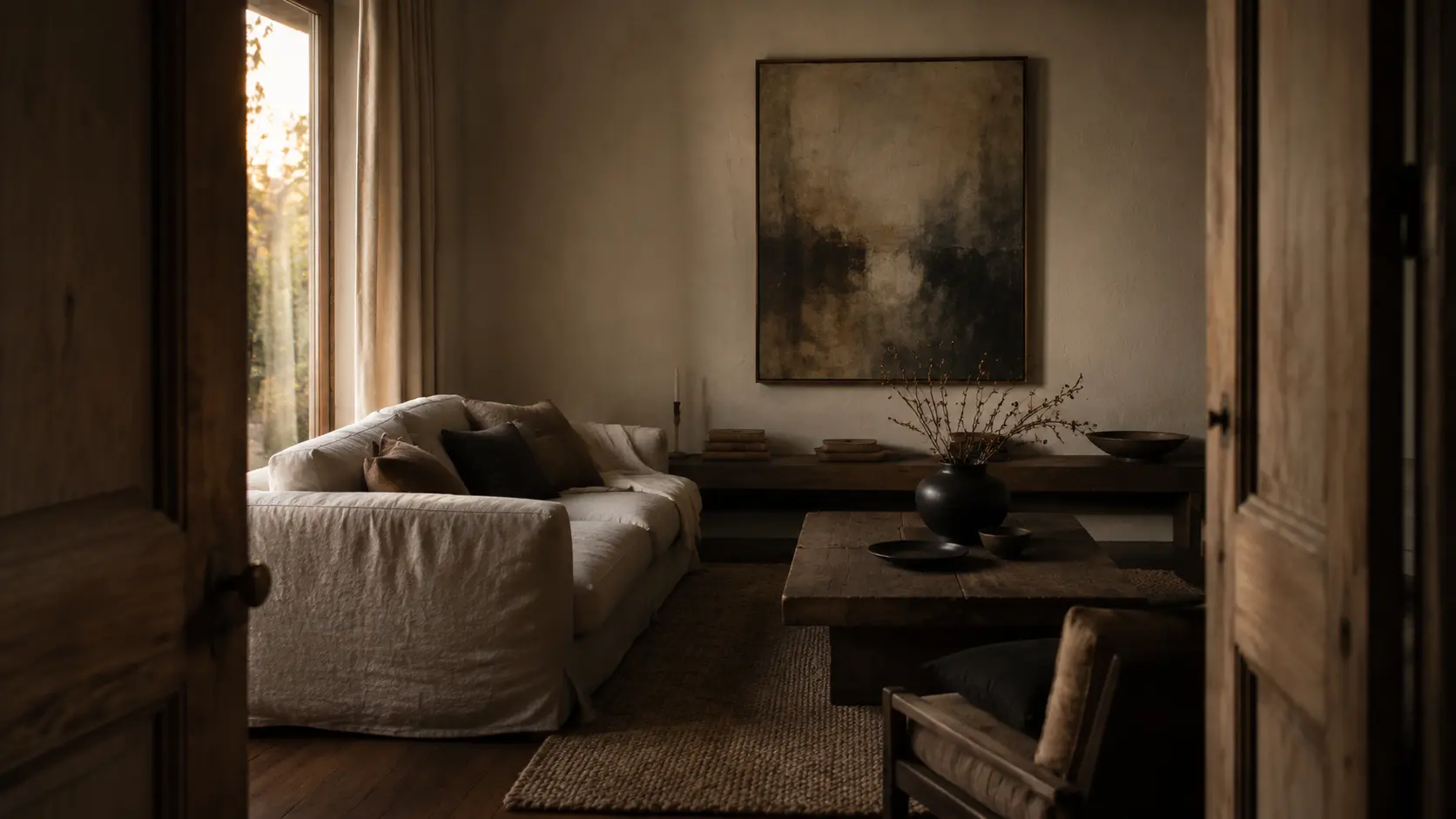
A room can disappear from daily life and remain vivid in the mind.
Years later, we may still remember the pale light across its floor, the worn arm of a chair, or the artwork that seemed to hold the entire space together. We may remember the quiet of an early morning there or the way the room changed after sunset. The dimensions become uncertain, but the atmosphere survives.
Other rooms, however carefully arranged, leave almost no impression. They may have been elegant, harmonious, and technically complete, yet they vanish once we leave them.
Why some rooms stay with us has less to do with beauty, scale, or refinement than with emotional coherence. Their light, materials, objects, art, and signs of life belong to the same inner story. Instead of presenting themselves all at once, they offer something to notice, feel, and remember.
Curatora Journal Video
Watch the Curatora Journal visual essay exploring how art, atmosphere, and personal meaning shape the rooms we remember.
Why Some Rooms Stay With Us: Atmosphere Becomes Memory
When we recall a meaningful interior, we rarely retrieve it as a complete list of furniture. Memory is more selective. It preserves fragments: the temperature of the light, the silhouette of a lamp, a dark painting above a mantel, or the rhythm of footsteps on a wooden floor.
These fragments often carry more emotional weight than the room’s most prominent objects. A slightly faded textile may remain clearer than an immaculate sofa. A small ceramic bowl may become inseparable from the memory of a particular table. An artwork may stay with us not because we understood it immediately, but because its presence altered the mood of the room.
This is one reason memorable interiors do not always translate perfectly into photographs. A photograph can document proportion, color, and arrangement, but our experience of a room unfolds through time. We enter it, move through it, sit within it, and watch the light change. We notice one detail before another. Meaning accumulates gradually.
A lasting room does more than look composed. It creates a sequence of impressions.
Light and Texture Create an Emotional Landscape
Light Establishes the Emotional Weather
Light is often the first element we feel and the last one we consciously analyze.
A north-facing room with cool, even illumination has a different emotional register from a space filled with low amber sunlight. Strong contrast can make an interior feel dramatic and sculptural. Diffused light softens edges, quiets colors, and encourages a slower kind of attention.
Memorable rooms frequently allow light to remain visible as an active part of the design. It moves across textured plaster, catches the edge of a frame, or settles into the weave of a fabric. The room changes without being rearranged.
This changeability gives an interior a sense of life. Rather than remaining fixed, it develops different moods throughout the day.
Texture Gives Memory Something to Hold
Texture creates intimacy because it invites us to imagine touch. We recognize the visual softness of linen, the coolness of stone, the grain of timber, and the irregular surface of handmade ceramic before making physical contact with them.
When every surface is equally smooth and perfected, the eye has little reason to pause. A considered contrast between polished and weathered, soft and structured, or matte and reflective creates a richer sensory field.
The aim is not to fill a room with competing materials. It is to select a few that express its character clearly. A linen curtain against a mineral wall may be enough. So may a dark timber console beneath a painting with visible depth and movement.
Art Can Become the Room’s Visual Memory
Art often plays a special role in the rooms we remember. Unlike many functional objects, it does not need to justify its presence through utility. It can introduce ambiguity, emotion, contrast, or stillness without explaining itself.
A work of art may echo the architecture around it, or it may resist the room’s established order. A restrained interior can gain energy from an expressive composition. A richly layered room may benefit from a quieter piece that gives the eye somewhere to rest.
What matters is not whether the artwork matches the upholstery. The deeper question is whether it contributes to the emotional structure of the space.
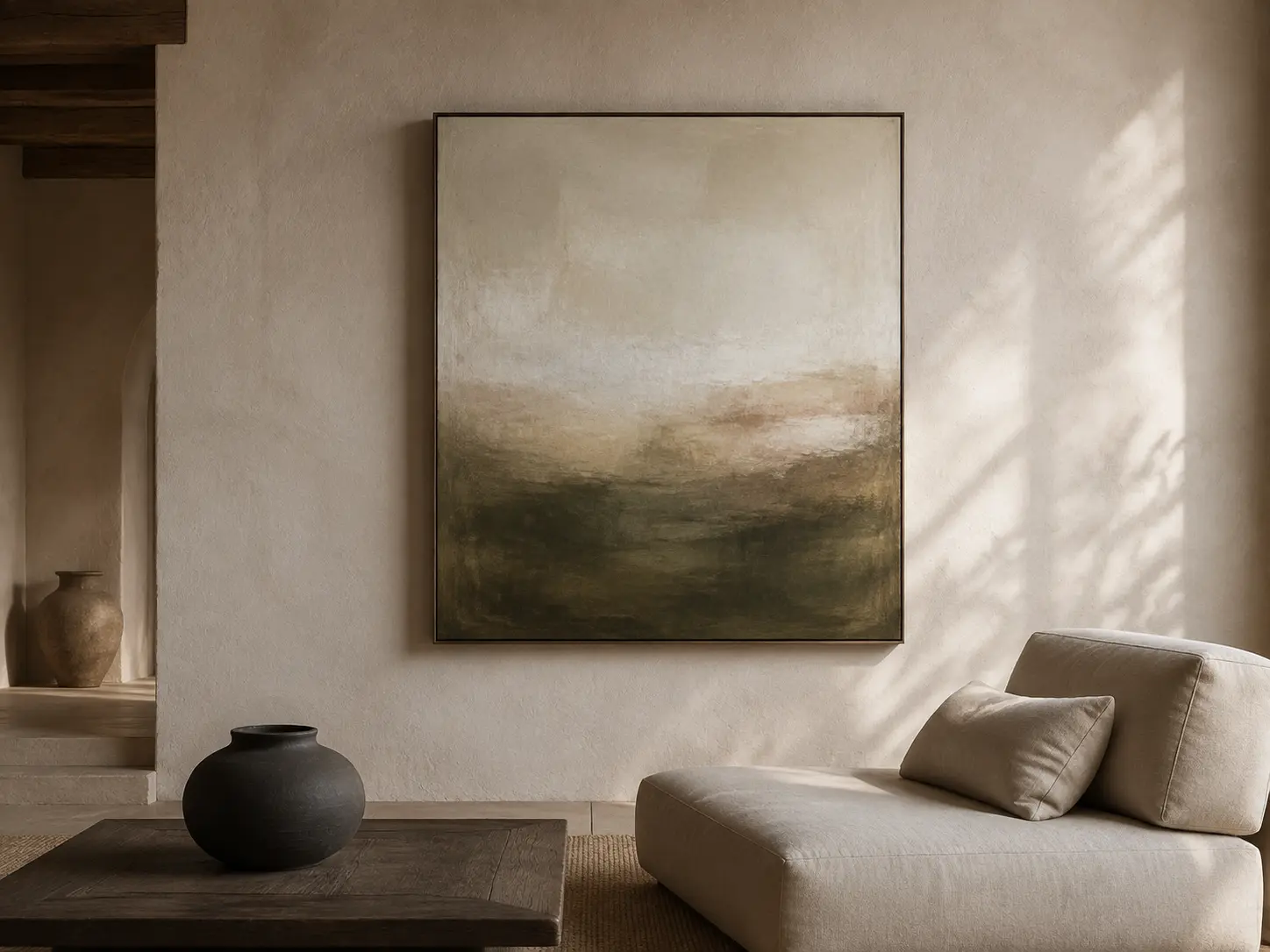
In a living room, art is especially influential because the room is experienced from several positions and at different times of day. The work may be seen from the entryway, across a conversation area, or in passing from another room. Its scale, placement, and visual weight help establish where attention settles.
A thoughtful selection of Living Room Wall Art can reveal how subject, proportion, and palette shape a room’s atmosphere without reducing art to a decorative finishing touch.
The Most Memorable Choice Is Not Always the Safest One
Rooms become forgettable when every choice is made solely to avoid tension. If every color belongs to the same narrow tone, every object carries equal visual weight, and every surface has the same degree of refinement, the result can feel resolved but emotionally flat.
A memorable interior usually contains at least one moment of distinction. It might be an oversized artwork in an otherwise restrained room, an antique object beside a contemporary form, or a deep color appearing within a pale architectural setting.
Personal Meaning Cannot Be Styled Into Existence
A beautiful room and a personal room are not necessarily the same thing.
A personal interior contains evidence of preference, use, and time. Its objects feel selected rather than merely placed. Some may carry private significance, while others simply reveal what the inhabitant finds visually compelling. Together, they prevent the room from feeling anonymous.
This does not mean every possession should be displayed. Personal meaning becomes more legible when it is edited. A few well-chosen books, a collected object, an inherited chair, or an artwork selected through genuine response can say more than a surface crowded with decorative accents.
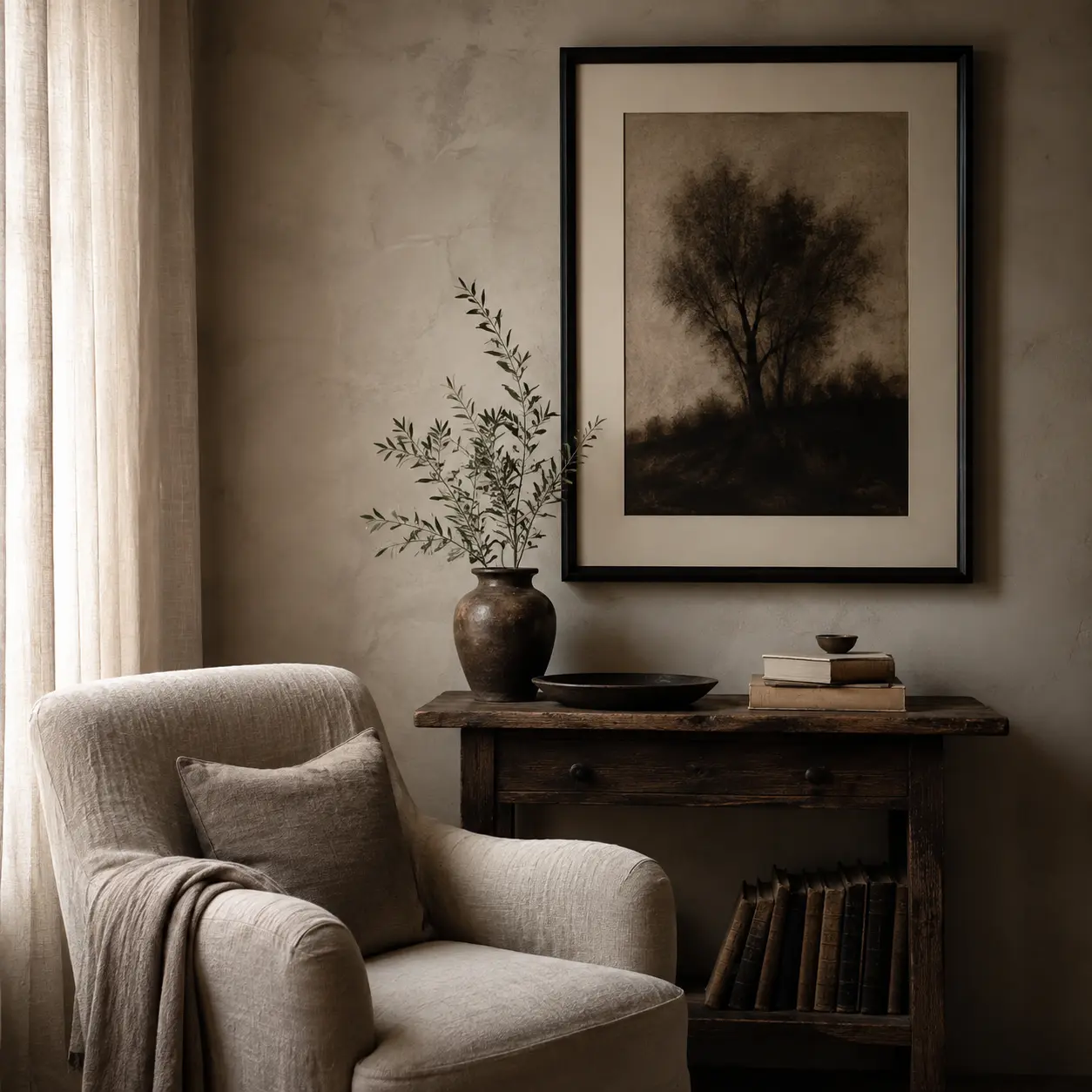
The most convincing rooms often balance control with openness. Their composition is deliberate, but it leaves room for life to continue. A table can receive new objects. A wall can accommodate another work. Materials can age without undermining the design.
This sense of incompleteness is valuable. It allows the room to become more itself over time.
Coherence Matters More Than Perfection
A memorable room does not need to follow a single design category with absolute discipline. It does, however, need coherence.
Coherence is the feeling that different elements belong together even when they are not identical. It may come from repeated materials, related proportions, a controlled palette, or a shared emotional tone.
Begin With an Emotional Direction
Before choosing objects, it helps to define how the room should feel.
Words such as quiet, grounded, luminous, intimate, dramatic, or contemplative are more useful than a rigid style label at the beginning of the process. They create a standard against which individual decisions can be tested.
A contemplative room may call for broad negative space, low contrast, tactile materials, and art with atmospheric depth. A dramatic room may rely on stronger silhouettes, deeper colors, directional light, and a more commanding focal point.
Once the emotional direction is clear, style becomes a tool rather than a restriction.
Repeat Without Making Everything Match
Repetition creates rhythm. A dark line in an artwork may reappear in a lamp base. The warm tone of timber may be echoed in a textile or ceramic surface. A curved chair can answer the arc of a doorway or the organic movement within a painting.
These connections do not need to be obvious. In fact, the most satisfying relationships are often sensed before they are consciously identified.
Matching reproduces the same idea. Repetition develops it.
Preserve Areas of Quiet
A room cannot hold attention if every part of it demands attention.
Negative space gives significant objects room to register. It also allows materials, shadows, and architectural lines to become part of the composition. An unfilled section of wall may strengthen the artwork beside it. A clear tabletop may make a single vessel feel more intentional.
Visual quiet should not be mistaken for emptiness. It is an active element that controls pace.
How to Create a Room That Feels Memorable
There is no universal formula, but several questions can help turn a well-arranged room into a more resonant one.
Identify the Element That Carries the Room
Every strong interior benefits from a clear center of gravity. This may be an artwork, a fireplace, a view, an architectural feature, or a sculptural piece of furniture.
The focal element does not have to dominate through size or color. It simply needs enough presence that the rest of the room can establish a relationship with it.
Once identified, protect it from unnecessary competition. Adjust nearby objects, lighting, and spacing so that attention can reach it naturally.
Design for More Than the First View
Consider how the room appears from the doorway, but do not stop there. Sit in each primary position. Notice what enters the frame from an adjacent space. Observe whether the wall opposite a chair offers a meaningful view.
A room is not experienced from a single photograph-ready angle. Its identity emerges through movement.
This is particularly important when placing art. A work that seems correctly positioned from the center of the room may feel disconnected from the places where people actually sit. The strongest placement often creates a visual relationship between the artwork, furniture, and human point of view.
Let Light Participate in the Composition
Observe the room before deciding how to complete it. Notice where daylight falls in the morning and where shadows gather later in the day.
Place tactile surfaces where the light can reveal them. Consider whether reflective materials intensify the room or create distraction. Use artificial lighting to support the atmosphere after sunset rather than attempting to reproduce daylight uniformly.
A room becomes more memorable when it is allowed to have different emotional chapters.
Include One Choice That Feels Entirely Your Own
The most important decision may be the one that cannot be justified by a trend report or design rule.
It could be an unusual artwork, a color that holds personal meaning, a timeworn object, or an unexpected combination of periods. If it feels connected to the inhabitant and considered within the whole, it can become the element that gives the room its identity.
Rooms stay with us when we sense that someone made a real choice.
Style Should Support Identity, Not Replace It
Interior styles can provide a useful vocabulary. Organic modern, transitional, old world, Scandinavian, Art Deco, or quiet luxury each suggest particular relationships between form, material, color, and ornament.
Yet a style becomes most compelling when it is interpreted rather than reproduced. The goal is not to make a room resemble a category image. It is to understand which principles resonate and adapt them to the architecture, light, and life already present.
Exploring Shop by Interior Style can help clarify these differences and reveal how art participates in each visual language. The most successful outcome, however, is an interior that feels specific to its setting and inhabitants.
The Rooms That Last Are Allowed to Change
A memorable room is rarely frozen at the moment of completion.
Textiles soften. Timber develops character. Books move from one surface to another. New art enters, while certain objects quietly disappear. These changes are not failures of the original design. They are evidence that the room is participating in life.
The strongest interiors provide enough structure to absorb change. Their identity does not depend on every object remaining in a prescribed position. Instead, it lives in more durable relationships: the quality of light, the balance of openness and enclosure, the dialogue between art and architecture, and the emotional tone established by materials.
This may be the clearest answer to why some rooms stay with us. They do not remain in memory because they were perfect. They remain because they felt complete enough to hold us and open enough to let life leave a trace.
At The House of Curatora, this is the enduring role of art within an interior: not simply to occupy a wall, but to help shape the atmosphere through which a room becomes meaningful.